 I just can’t believe what I read the other day and what I am about to write about right now. This about trust—trust between patients and their healthcare providers. This is about trust that is being broken.
What I read:
The New York Times published an article on January 29, 2016, entitled: Drug Shortages Forcing Hard Decisions on Rationing Treatments. It was actually the subtitle that caught my attention: Such shortages are the new normal in American medicine. But the rationing that results has been largely hidden from patients and the public.
The article was not specific to childhood cancer or cancer in general, but many of the doctors quoted were oncologists. They talked about different approaches to rationing drugs, including decisions based on age. I encourage you to read the entire article, if you haven’t already.
What I’m writing about:
I’m going to reserve comment on the drug shortage problem itself, including the causes behind it and any proposed solutions. I am also going to reserve comment on the complex issue of rationing the drugs, other than to say that I recognize that nobody wants to be in this situation and that such decisions must be very difficult. I don’t want to get into any of that right now.
I’m writing about 1 aspect and 1 aspect only: the decision to not tell the patients and families.
Here are some specific highlights for context, taken verbatim from the piece:
CLEVELAND — In the operating room at the Cleveland Clinic, Dr. Brian Fitzsimons has long relied on a decades-old drug to prevent hemorrhages in patients undergoing open-heart surgery. The drug, aminocaproic acid, is widely used, cheap and safe. “It never hurt,” he said. “It only helps.”
Then manufacturing issues caused a national shortage. “We essentially did military-style triage,” said Dr. Fitzsimons, an anesthesiologist, restricting the limited supply to patients at the highest risk of bleeding complications. Those who do not get the once-standard treatment at the clinic, the nation’s largest cardiac center, are not told. “The patient is asleep,” he said. “The family never knows about it.[…]
Studies have associated alternative treatments during drug shortages with higher rates of medication errors, side effects, disease progression and deaths. For example, children with Hodgkin’s lymphoma who received a substitute to the preferred drug had a higher rate of relapse, researchers found, and adults with a genetic disorder called Fabry disease had decreased kidney function when their medication was cut by two-thirds. One alternative guideline adopted during a shortage of intravenous nitroglycerin “was downright scary from a clinical perspective,” according to Dr. Nicole Lurie, a senior federal health official.
Physicians say that many of the changes they are compelled to make appear to do no harm. But, they acknowledge, typically no one is tracking outcomes in patients who get a drug and others who get a substitute or delayed treatment.
Doctors and hospitals often do not tell patients about shortages and the resulting rationing because they do not want them to worry, especially when alternative drugs are available, or because they feel it would stir up too much anger.
Dr. Ivan Hsia, an anesthesiologist in Ontario, Canada, said many physicians in his field adopt what he called “the paternalistic model — like I’ll inform them when I think it’s unsafe enough to inform them.
When he and his colleagues surveyed hundreds of patients at the Mayo Clinics in Arizona and Florida and others in Canada about their preferences, the results surprised him. Most wanted to know about a drug shortage that might affect their care during elective surgery, even if there was only a minor difference in potential side effects, and many said they would delay surgery.
When the study was published last year in the journal Anesthesia and Analgesia, an accompanying editorial urged health professionals to disclose shortages and their implications. “Patients want to know and they should know,” the editorial said. “There is no ethical ambiguity.”
Dr. Eric Kodish, a children’s cancer doctor who heads the Cleveland Clinic’s center for ethics, humanities and spiritual care, said patients should be told. “It’s their bodies and their lives that are on the line.”
Indeed, Beverly Smith, a Cleveland patient who has Crohn’s disease, said she had no idea that an important ingredient had been removed from the daily intravenous nutritional treatments she depends on until she developed side effects from the deficiency. “Why didn’t anybody tell me?” she asked. [….]
A recent shortage of a therapy for bladder cancer, BCG, demonstrates how the lack of national guidance can lead to very different decisions. One ,urologist, Dr. Andrew Stephenson, said he came up with BCG rationing guidelines that were used with dozens of patients after being shared with colleagues. “We tried to reserve the BCG for those patients who needed it the most,” he said.
Merck, the manufacturer, said it filled requests from a waiting list in the order received, and left rationing decisions to doctors. Some cancer centers reduced the length of BCG treatment from three years to one, because the benefit may be smaller after the first year. Others restricted BCG to patients whose tumors were mostly likely to spread or recur. And still others decided to reduce the typical dose so that each vial could be used for three patients instead of one, which some experts say raises questions about efficacy. Some outpatient clinics just ran out.”
Wait—what? Patients are not being told about shortages and rationing, citing reasons such as “worry” and “anger”? Is that really what I read? I seriously had to do a few takes and pinch myself.
 As a registered pharmacist who is trained in the hospital setting, I have to say that I am completely and utterly appalled by even the mere suggestion—and this is no mere suggestion, but what it actually says. Good grief.
“Patients should know.” “Patients should be told”. Should, should, should.
With all due respect, what’s with the “should”?
Nothing like stating the obvious here, but there is no should in this argument. Unequivocally, patients must be told if a therapy is being modified in response to a drug shortage.
Then we have this part, which completely blows my mind: “And still others decided to reduce the typical dose so that each vial could be used for three patients instead of one, which some experts say raises questions about efficacy.”
Wow, raises questions about efficacy, you don’t say? Are patients being told about these potentially efficacy-reducing dose-reducing strategies of rationing drugs to spread them around, even if the spreading around is thin? I can’t even find the words for just how  unethical it would be to not tell the patient that a dose reduction to save drug was being made behind their backs. I just can’t even get my head around that so-called strategy.
For many types of cancers, not all but many, alternative regimens exist that are considered equally effective. If I was being treated for cancer or if one of my family members were being treated for cancer, no way would I accept a suboptimal dose or duration of a chemotherapy agent on the basis of a drug shortage. I would explore alternative regimens. I would explore treatment at another center, if that’s what it took. If a dose reduction was ultimately the way to go, that would be for me to decide, after a detailed discussion of risk:benefit with my doctor.
Cancer patients have a tough enough battle without unknowingly receiving a potentially less effective (and possibly more toxic) substitute.
In some cases, reducing the dose a little might be a reasonable option. In other cases, it may be unreasonable.
The bottom line is that patients must be involved in this decision-making process.
I don’t care how busy these doctors and pharmacists are; they need to find time to explain the shortages to the patients and work with them on a solution that everyone feels good about.
So that’s the reality out there. Yeah, it’s scary, but I believe that it is way better to be informed than to live with one’s head in the sand.
I have no way of knowing how pediatric oncologists and adult oncologists may differ in terms of how they are handling the communication surrounding the changes they are being forced to make in response to not having enough drugs to go around.
 I am in no way trying to demonize anyone.
Again, to reiterate, my gripes are not around the tough choices—but instead about the lack of disclosure to patients and families.
Clearly, it is more important than ever to really be vigilant—like a hawk.
Know the prescribed doses of all drugs to be used over an entire treatment regimen, also verifying that the doses are within the recommended ranges.
Keep yourself abreast of the drug shortage problems. Here are links listing drug shortages by generic name: http://www.ashp.org/menu/DrugShortages and http://www.accessdata.fda.gov/scripts/drugshortages/default.cfm. Check them. Nobody should have to do this on their own, but apparently patients must stay informed about this

Daunorubicin, primarily a leukemia drug and used for a few other cancers, remained in short supply for over 18 months 2014-2015
stuff. If there is any ambiguity or any questions, I would suggest calling the pharmacy at your hospital or clinic. It might not hurt to call them anyway. Form a relationship. If you have any friends or family members who are physicians, pharmacists, or nurses, ask them to help you as well.
Everyone should be doing this anyway, but if you haven’t been then now is the time to start: routinely check the dosing on any prescription bottles or infusion bags. Make sure the dosing has not changed. If it has, ask about why it is different. Sometimes doses might be modified due to a prior toxicity or for some other justifiable reason. It may or may not have anything to do with a drug shortage.
Preventing such an encounter is a much better plan though. So next time you talk to your doctor, pharmacist, or nurse, you may want to open up the dialogue. Be direct. Tell them you saw the New York Times piece. Tell them you are concerned about something like that happening to you or your loved ones—changes being made or drugs being withheld without your knowledge. Make it clear that you want to be informed. Talk to them, openly and honestly, but still stay vigilant!
If it were me or my family member and we showed up at an outpatient cancer clinic, only to find that what we had shown up for had been intentionally modified (whether it be a substituted drug or a reduced dose) without my knowledge or approval, I would go and round up 3 chairs: 1 for the prescribing physician, 1 for the dispensing pharmacist, and 1 for the infusion nurse. All 3 of them hold a responsibility. It would be explanation time. That’s just what I would do.
I would not be happy if it happened to me or a loved one, and I’m equally as unhappy knowing that these things are happening to other patients.
If a medication is being modified in response to a drug shortage, and the response is that it won’t affect anything, then ask your doctor for the evidence. Have them back it up just to be safe.
So, be proactively aware. Don’t be afraid to ask questions or speak up. Don’t let concerns get brushed off without evidence.
Trust your instincts.
Author: Laurie Orloski, PharmD


 Nineteen years ago when Conor, my grandson, was diagnosed, at 15 months old, with High Risk Neuroblastoma, a challenging and difficult to cure #ChildhoodCancer. Back then, it had a 30% survival rate. Every night after work, I would get on my home computer trying to find information. What I found was dismal, even terrifying. After a week, I found a story of a 6 year old boy who was diagnosed at 1 yr. old. He gave me the strength of HOPE that I needed to watch Conor take treatments, chemotherapy, radiation, surgery, scans and more. I now have a chance to give HOPE to any parent or grandparent who needs it. You’ll be able to tell Conor is doing great today, so here’s a dose of HOPE. Maybe it will stick with you on your cancer journey with your child. I would love for this to help you as much as the HOPE a little 6 year old boy gave me years ago. Check It Out
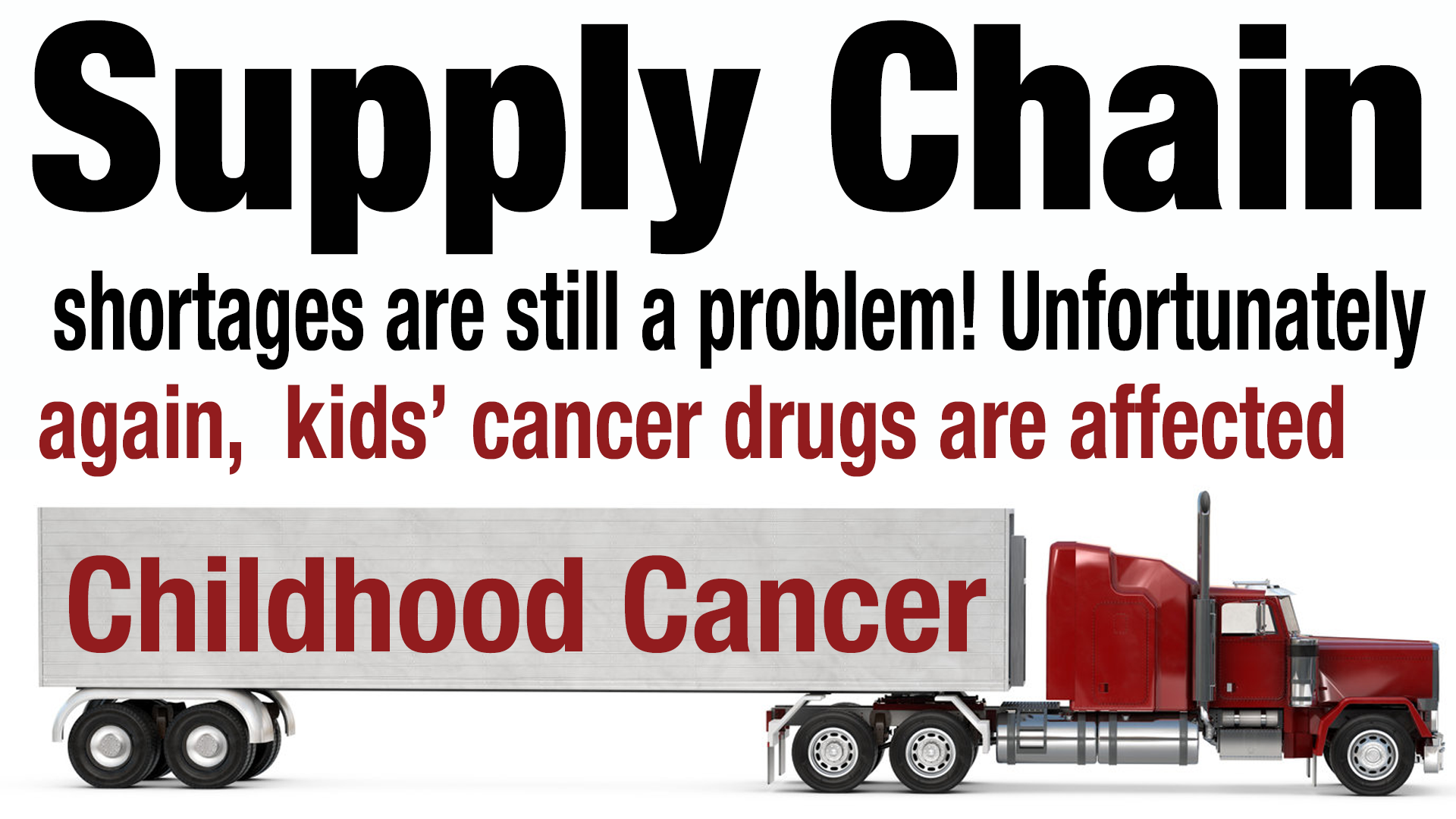 “Eleven oncology drugs, maybe 14, are currently in shortage. Four of these — cisplatin, carboplatin, methotrexate and fludarabine — are commonly used to treat cancer in adults and children,” “Patients worry about whether they’ll receive their next treatment, or if switching to another treatment will shorten their lives,” ASCO Chief Medical Officer Julie R. Gralow, MD The FDA is investigating the importation of some critically short drugs from China. Click here for the latest updates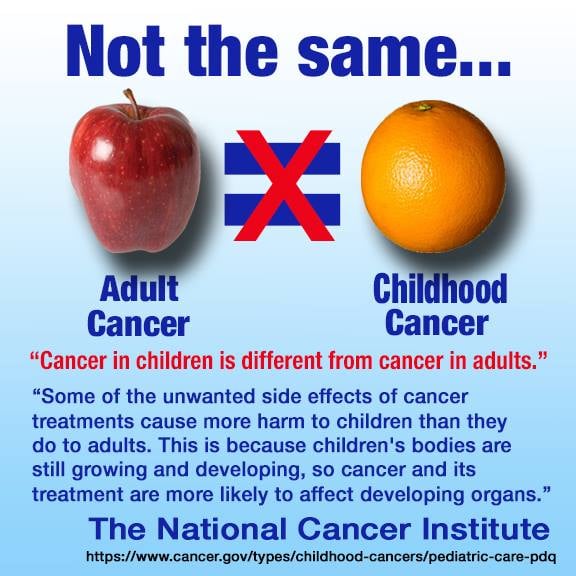


 watched everything in our daily life – our cars, entertainment and homes – advance with new science and technology over the decades. However, for DIPG, nothing has changed in the standard treatment. DIPG is exactly the same. Each child receives an outdated 6-week course of radiation and a hug for good luck with a 6-9 month life expectancy. From what the doctor told him when diagnosed, Jace had 9 months to live. He went home and calculated it; he was “scheduled” to die on the day before he was to celebrate his 21st birthday. He was not about to let that happen! He and his mother began praying and got busy looking for the best treatments and if not one to cure it, then at least something that would prolong his life. They eventually found a revolutionary trial at Stanford in California.
 several infusions over periods of time. Because of his age, and his acute knowledge of the disease, unlike the very young children that typically have this tumor, Jace was able to communicate exactly what his body was going through each time he was infused. Jace knew what his situation was and was acutely aware that the outcome for him would not necessarily work with these early trials. He gladly used his body and treatment experiences to gain as much detailed information as possible. He knew his medical data coupled with his ability to provide pinpoint information was invaluable to the medical and research teams in helping them refine the process for others who would follow him. Jace and many others familiar with DIPG believe delivering CAR T-cells directly to the tumor is the most promising method to find a possible cure for this terrible disease that is killing our children.
  To expand the DIPG Car T Cell trial, Stanford needs a dedicated research Fellow, a Cell Pharmacist, and a research Nurse Practitioner. The Fellow and Cell Pharmacist have been funded and began work this month. The last step now is getting the Nurse Practitioner (NP) funded for two years. The Nurse Practitioner is responsible for gathering the correlative data from patients including blood draws, recording symptoms, managing medication for pain and inflammation. Each patient is different and all information is so important to gather. We need to be able to have more kids enrolled in trials as soon as possible to help the children live longer, and perhaps find a cure. We also need to learn from these children.


 Two words that are used most when people contact Members of the House or Senate are: “I want,” and “I need.” Representatives and Senators hear them everyday. The two words they seldom hear are “Thank You.”
 This year alone, Congress passed the RACE Act, which will improve drug development for childhood cancers. $12.6 million was appropriated for a fifth year for the Gabriella Miller Kids First Act. The Department of Defense, CDMRP, again provided millions of dollars in funding for Pediatric Brain Cancers and the Peer-Reviewed AYA and Pediatric Cancer Research Program. The House and the Senate passed and fully funded the Childhood Cancer Survivorship, Treatment, Access, and Research


 Updated 03/29/2026
 shift at Rady Children’s Hospital in San Diego, CA watching over my 18 month old grandson and JoAnna’s nephew, Conor, after he had lifesaving surgery to remove a neuroblastoma tumor wrapped around his aorta. We were providing some relief for my oldest daughter,
  person of Conor’s mom and me. She is a powerhouse who has been a critical care and oncology RN nurse to children for about 30 years. People do not want to listen to her because she speaks of the very sad and unspeakable… children dying. Not only dying, but most kids are having to die in strange places, like hospitals. As Suzanne says, children dying is unimaginable, c


 attending the Children’s Brain Tumor Tissue Consortium (CBTTC) Annual Investigator/Foundation Meeting in New Orleans, saying yes to an excursion to the Big Easy was very easy. I figured I could go, take notes and write them up, and thus make a tangible contribution to a cause that I care so much about.
 In terms of my note-taking, there was so much technical information that I am in the “process of processing”. But in the meantime, I wanted to share with you – members of the childhood cancer awareness community – some of the big takeaways.
 CBTTC. Not only are 8 institutions working together to break down those silos, they are more than happy to share, Share, SHARE their data with institutions outside of the CBTTC network. Their willingness and ability to do so stems from a genuine desire to save lives—save them while sparing them from the long-term and sometimes life-long toxicity of treatment regimens that are unlikely to help them, based on the characteristics of their own unique tumor biology. We can do things now, in the year 2016, that simply couldn’t be done before. On that note, while the CBTTC has been collecting high-quality biospecimens for several years, simply collecting tumor tissue isn’t enough from a saving lives standpoint. So they have not only been collecting tissue from all brain tumor types, but they have been linking that tissue to long-term clinical and genomic data. Then, by creating an open-access specimen and data informatics system, an environment for worldwide collaboration can be put into place. And it has been put into place already, with the introduction of CBTTC’s CAVATICA—a new cloud-based environment for securing storing, sharing, analyzing large volumes of pediatric brain tumor genomics data. CAVATICA is named after Charlotte A. Cavatica—the
  barn spider of the children’s story Charlotte’s web. It’s not puffery to say that real advances can and will come from this type of comprehensive genomics/clinical database. As I learned at the meeting, the CBTTC already has several commercial partnerships in place to develop what we might call “apps” to make sifting through such large volumes of data more user friendly. They have also partnered up with the Pacific Pediatric NeuroOncology Consortium (PNOC, network of 15 children’s hospitals that conduct clinical trials of new therapies), creating a critical bridge between science and clinical medicine. CAVATICA is so innovative and the partnerships in place are so very timely, fitting right into the Cancer Moonshot.
 funded in its entirely via donor support. Without the enthusiasm and generosity of the various non-profit foundations, CAVATICA would not exist. And it is not lost on me that children, many of whom have lost their lives, are the ones making this happen—these kids include Kortney Rose (age 9 when she passed away from brain cancer after 4.5 months), David (age 18 when he passed away from brain cancer after about 2 years), Christopher (age 7 when he passed
  away from brain cancer after 9 months), and Thea (diagnosed with brain cancer at 4 months of age and continuing her fight at age 9, having been in treatment almost her entire life), and so many other foundations, families, and donors who are stepping up to make the vision of the CBTTC a reality. I encourage everyone reading this to learn more about the CBTTC in particular and figure out ways to collaborate on the Cancer Moonshot in general—which is far more complex and for which far more is at stake relative to the regular “Moon” Moonshot. Whereas the moon is one big static thing, curing cancer will require precise rockets specific to millions of big and little people.
 On September 12, 1962 President Kennedy delivered his famous “moonshot” speech.
  Declaring that as a nation, we would focus vast resources to landing a man on the moon and safely bringing that man back to earth. It was ambitious and the roadmap was not fully developed. President Kennedy of course never lived to see that dream come to fruition; however when it did it is now even more fitting and apropos that the man who ultimately first set foot on the
  For the childhood cancer community, a simple question surfaced: Are our children going to the moon? The news release the White House issued does specifically mention pediatric cancer. The outlined effort for pediatric cancer, as denoted in the release, is aimed at developing new technologies for drug libraries for screening to discover new treatments; efforts to increase tissue and tumor specimen collection for the “rarest” childhood cancers; and the collection and inclusion of increased clinical data to assist clinicians in the future course of treatments. Based upon this thumbnail outline, it is difficult to tell whether or not our children will set foot on the surface or whether they will be like Michael Collins, who stayed in the command module poised to pick up Armstrong and Buzz Aldrin after they completed the first walk on the surface in 1969. In theory the efforts outlined in the release would certainly make a positive impact in the fight against childhood cancer. Creating a larger drug library for increased efforts at drug screening is critical to determining whether or not existing drugs, compounds, and even potentially biologics, demonstrate efficacy upon specific cell lines, tumor types, genetic mutations or other identifiable targets.
 I view childhood cancer like a bicycle wheel full of spokes. There are many spokes on the wheel and individually the spokes represent separate issues to be addressed. No single spoke is sufficient enough that if it was the focus of the moonshot it would be a “cure” for all forms of childhood cancer. Accordingly, placing bets on which spoke to focus upon is obviously very difficult. There are some commentators that have already opined that the amount of money to be dedicated to the overall effort is insufficient. This is probably very true. And, thus as we drill down to where our children fall in this moonshot, it seems likely that the overall impact will not be significant. Of course it is impossible to provide any reasoned assessment of the overall efficacy of this effort at this point in time. It is
  easy to criticize, but such criticism is presently misplaced. In the end, any additional focus and resources dedicated towards childhood cancer is thoroughly welcome.
 Fly me to the Moon
 President Obama called for an end to cancer in his State of the Union Address to the nation this year. He tasked his own Vice President with the job and since then the buzz word “Moonshot” has offered renewed hope for millions of Americans. E
 very one in our childhood cancer community is very excited about Joe Biden’s very aggressive initiative. He calls it, the


 I spent a brrrrrr cold Thursday afternoon in Philadelphia, at a
  (AACR) and the Philadelphia Media Network. It was the first time that representatives from 6 Cancer Centers across Pennsylvania (Philly to Pittsburgh) were assembled in this fashion. It was a really cool thing because it represents a new frontier of collaboration toward cancer cures.
 As I was walking out of the meeting, I spotted a very tall guy who stood out because he was so tall. But that face, so familiar. Then it was obvious — it was

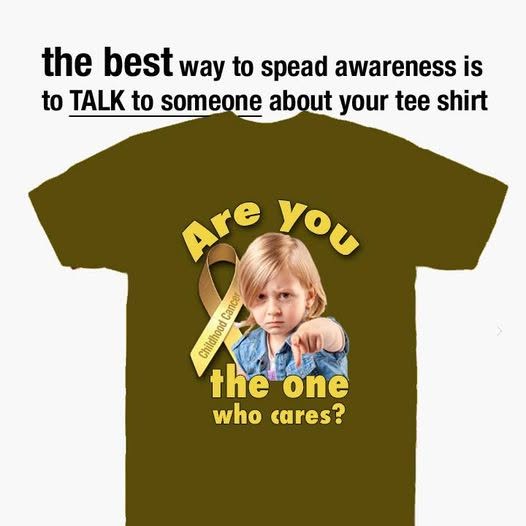
 Did you know that childhood cancer is more deadly than asthma, cystic fibrosis, and pediatric AIDS combined. The month of childhood cancer awareness is in September, the ribbon is gold and people wear gold tshirts to support childhood cancer. But when that month is gone, the awareness is gone and so is all the support from the people wearing the gold tshirts. But that doesn’t mean pediatric cancer leaves…IT DOES NOT STOP.
 effects. That is how strong and harsh it is. Chemo side effects are mostly kidney failure, heart failure, and liver failure. And for most part secondary cancers. Also, only 4% of 100% of funds go to funding for childhood cancer research. Let’s make that into a 100%!!!


 Wouldn’t it be great if all car manufacturers (Ford, Toyota, Chevy) involved with September racing, stepped up and furnished a pace car or with a big gold ribbon? Toyota stepped up in 2015 for two September races to promote childhood cancer awareness month! Richmond International Raceway had a gold finish line and gold ribbons on the walls in addition to a big pre-race ceremony featuring childhood cancer kids leading the crowd in the Pledge of Allegiance. We would like to see other tracks where September races are held could even promote awareness by using the gold theme.


